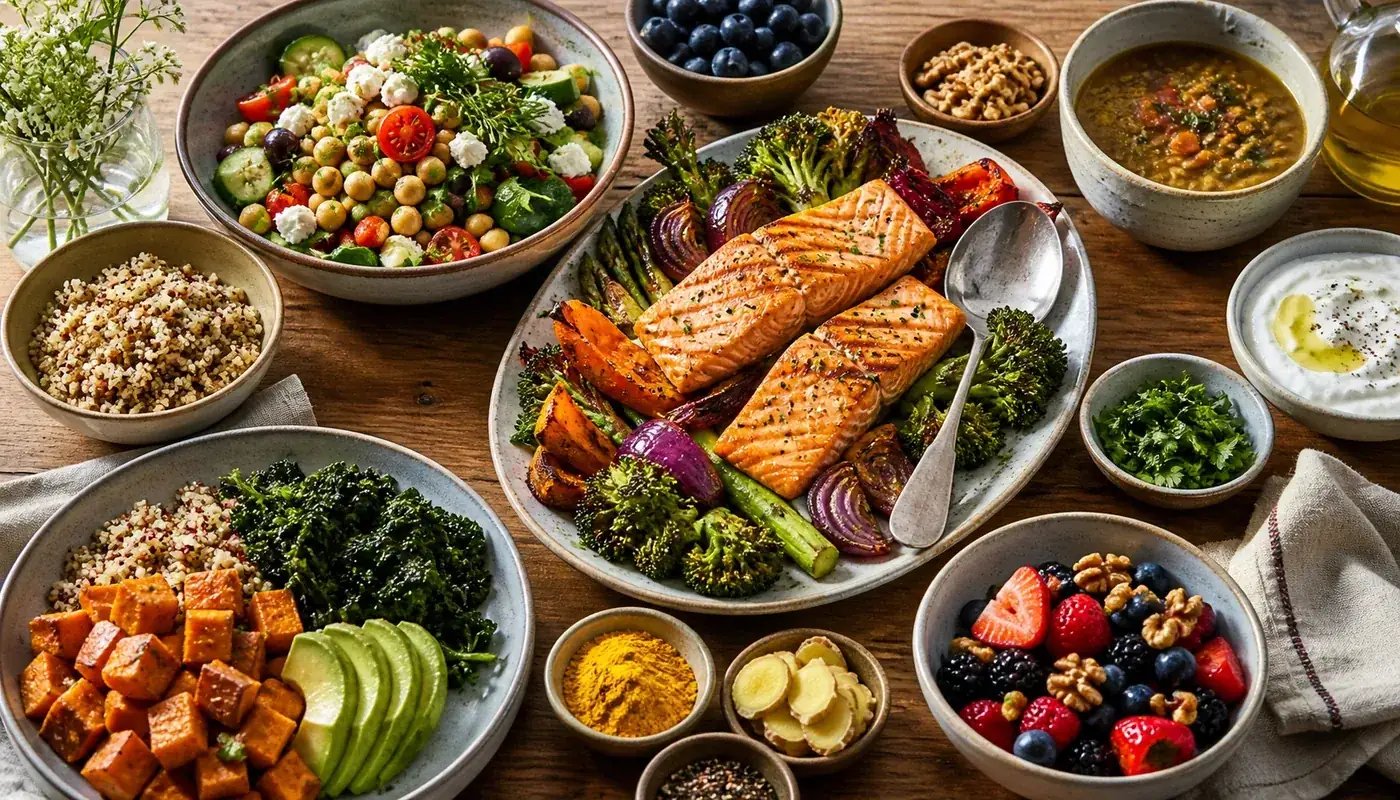
Anti-Inflammatory Eating Without the Hype
Highlights
- A varied eating pattern matters more than any single spice, juice, or superfood.
- Vegetables, fruit, beans, whole grains, nuts, and unsaturated fats provide a practical foundation.
- You do not need to eliminate gluten, dairy, or seed oils simply because they appear on an online forbidden-food list.
- Food can support health and complement treatment, but it does not replace care for an inflammatory disease.
An anti-inflammatory dinner does not need a special powder, a dramatic color, or a price that makes you reconsider groceries as a hobby. It might be bean chili, vegetable curry, a salmon sandwich, or a bowl of oats with fruit and nuts.
The phrase anti-inflammatory eating can sound like a tightly controlled treatment plan. In practice, its most useful version looks like a varied, satisfying pattern built from familiar nutritious foods. The emphasis is on what you regularly eat, not on finding a single ingredient that cancels out everything else.
That is good news for anyone who would like to support their health while continuing to enjoy dinner. There is room for flavor, convenience, cultural favorites, and the occasional meal chosen simply because it sounds delicious.
The pattern is what survives the novelty. One fashionable berry in the back of the fridge is not a diet.
The short version
Inflammation Has a Useful Job
Inflammation is part of the body's response to injury and infection. The redness around a healing cut is not evidence that your immune system has failed. It is part of a protective process.
Problems arise when inflammation becomes persistent, inappropriate, or connected with an underlying disease. That is different from declaring every temporary ache or digestive sensation a sign of chronic inflammation.
Food can influence some pathways and markers associated with inflammation, but it is only one part of the picture. Smoking, sleep, activity, infections, medications, and medical conditions can also matter.
Blood tests such as C-reactive protein, or CRP, can indicate inflammation without identifying its cause. A number cannot tell you that last night's bread was the culprit. Symptoms and abnormal results need context rather than an automatic elimination diet.
Start With a Pattern, Not a Miracle Ingredient
A Mediterranean-style eating pattern offers a useful starting point: plentiful plant foods, legumes, whole grains, nuts, olive oil, and fish if you eat it, with fewer heavily processed meats and sugary extras.
Such patterns can improve some markers of inflammation, although the size and consistency of the effect vary. Their appeal also includes broader benefits for nutrition and cardiovascular health. It is not necessary for every ingredient to independently lower a laboratory marker to make the meal worthwhile.
You do not have to cook exclusively Mediterranean dishes. The same principles can fit lentil dal, bean tacos, vegetable stir-fries, or a hearty soup made with local ingredients.
Think in terms of repeated opportunities. Adding beans to lunch several days a week can have more practical value than buying a tiny packet of a fashionable berry and forgetting it in the refrigerator.
Give Plants More Room on the Plate
Vegetables, fruit, beans, and whole grains provide fiber, vitamins, minerals, and a variety of plant compounds. Different foods contribute different combinations, which makes variety useful without requiring a daily rainbow checklist.
- Add one vegetable to a meal that has none. Frozen peas can join pasta. Carrots can go into a stew. That is a real improvement, photograph or not.
- Make a salad or soup more substantial. A tin of beans turns a side dish into something that actually holds you until the next meal.
- Put fruit where you will reach for it. Whole fruit gives you fiber and texture that juice does not, and an ordinary apple needs no defending.
- Build up gradually. Going from very little fiber to enormous salads at every meal causes discomfort that healthier eating does not require.
Increase fiber gradually if your current intake is low. A sudden leap from very little to enormous salads and beans at every meal can cause discomfort, which is not a requirement for healthier eating.
Whole Grains and Beans Deserve Better Publicity
Whole grains retain components that are removed during refining, including much of their fiber. Oats, barley, brown rice, whole-wheat bread, and other grains can make meals filling and practical.
Beans and lentils add protein as well as fiber. They can stretch a meal budget and fit into dishes that already feel familiar. Mixing lentils into a meat sauce, adding chickpeas to a curry, or using beans in a baked potato does not require joining a dietary movement.
Refined grains are not forbidden. A useful approach is to replace some of them with whole-grain options where the taste and texture work for you. White rice alongside tofu and vegetables is still part of a meal, not a nutritional emergency.
If whole grains cause symptoms, consider portion size and the particular food rather than assuming the entire category is harmful. People with celiac disease need gluten-free choices, which can include brown rice, quinoa, and other suitable grains.
Choose Fats by What They Replace
Olive oil, nuts, seeds, avocado, and other sources of unsaturated fat can fit comfortably into this pattern. Replacing some saturated fat with unsaturated fat can improve LDL cholesterol, an important cardiovascular risk factor.
The replacement matters. Using olive oil in place of some butter is different from adding several tablespoons of oil to an unchanged diet because it carries a healthy reputation. Both portion and overall pattern still count.
Seed oils do not need to be banned as a category. The idea that ordinary dietary omega-6 fats inevitably drive inflammation is not supported by consistent human results. Canola, soybean, sunflower, and other liquid oils can have useful roles in cooking.
Foods made with these oils can still vary greatly in nutritional value. A vegetable stir-fry and a large bag of fried snacks are different meals for many reasons. Blaming a single shared ingredient misses the larger picture.
Make Protein Part of the Meal
Fish, beans, lentils, tofu, eggs, yogurt, poultry, and other protein foods can all contribute, depending on your preferences and needs. Fish such as salmon and sardines provide long-chain omega-3 fats alongside protein.
You do not need to eat fish if you dislike it or follow a vegetarian pattern. Plant foods can provide a satisfying foundation, and the rest of the diet matters too. A specific omega-3 supplement decision is separate from the question of whether dinner is nutritious.
Consider replacing some processed-meat meals with another protein source. That might mean bean soup instead of a sausage-heavy lunch or a chickpea filling in a sandwich. A substitution you enjoy is easier to repeat than one that feels like punishment.
Keeping enough protein in meals is also important when appetite is small. An enormous bowl of leafy vegetables is not automatically a complete meal just because it looks impressively green.
Use Herbs and Spices for Flavor First
Ginger, turmeric, garlic, cinnamon, herbs, and other seasonings contain interesting compounds. Their most dependable contribution to everyday eating is helping nutritious food taste good enough to eat regularly.
Try cumin and smoked paprika with beans, ginger in a vegetable stir-fry, or cinnamon in oats. A squeeze of lemon, a handful of herbs, or a spoonful of yogurt can turn leftovers into something you actually want.
A capsule is not a pinch of spice. Curcumin products vary widely in formulation and absorption, and some enhanced-absorption preparations have been associated with liver injury. Seasoning dinner needs no supplement schedule.
Enjoy the flavor and variety without expecting turmeric to neutralize smoking, erase a disease flare, or compensate for an otherwise limited eating pattern.
Skip Blanket Bans That Do Not Fit Your Health
Gluten needs to be avoided with celiac disease, and other specific conditions can require dietary changes. But removing gluten does not automatically make a diet healthier for everyone. If celiac disease is suspected, testing should generally happen before gluten is removed, because avoidance can affect the results.
Dairy is similar in the sense that individual tolerance matters. Milk allergy and lactose intolerance are different problems, and neither establishes that all people need to avoid dairy. Appropriate alternatives can also work when dairy is not desired.
A food that causes digestive symptoms is not necessarily causing systemic inflammation. Large servings, fermentable carbohydrates, or an intolerance can be involved. Understanding the cause helps avoid removing more foods than necessary.
Keep exclusions tied to a clear reason. A growing list of forbidden foods costs variety, money and dinner invitations.
Worth remembering
Build a Kitchen That Makes This Easy
A useful shopping basket can be quite ordinary, and most of it keeps for weeks.
A basket that makes weeknights easier
- Frozen vegetables, which are convenient and not nutritionally inferior to fresh
- Canned beans and lentils, rinsed if you are watching sodium
- Oats and whole-grain bread
- Fruit you will actually eat this week
- Nuts or seeds, and a cooking oil
- Canned fish and a protein food you like
Plain frozen produce is a convenient option; fresh is not automatically superior. A vegetable that gets eaten is more useful than an aspirational bunch slowly wilting in a drawer.
For a quick meal, combine a protein food, vegetables, a grain or other satisfying starch, and a flavorful sauce. Examples include tofu with frozen vegetables and rice, lentils with roasted carrots and yogurt, or salmon with a baked potato and peas.
Keep a few flexible meals in rotation rather than demanding endless novelty. Changing the vegetables, beans, or seasonings can add variety without requiring a new recipe every evening.
Look for Progress You Can Live With
Useful changes might include more regular meals, better fiber intake, less reliance on processed-meat lunches, or a cooking routine that feels manageable. None requires perfection or a ban on birthday cake.
Do not expect to feel inflammation leaving your body after a particular meal. Short-term sensations are not reliable measurements of systemic inflammation, and an underlying condition can fluctuate for reasons unrelated to food.
If you have rheumatoid arthritis, inflammatory bowel disease, or another inflammatory condition, dietary choices should complement the treatment plan. During some digestive disease flares, texture and fiber may need adjustment rather than simply adding more raw vegetables. Do not stop prescribed treatment because a diet sounds promising.
The most useful version of anti-inflammatory eating is a pattern you can afford, tolerate, and enjoy. Build it meal by meal, with plenty of room for ordinary food and ordinary life. A sustainable dinner routine has more to offer than a collection of nutritional rules that never reaches the table.