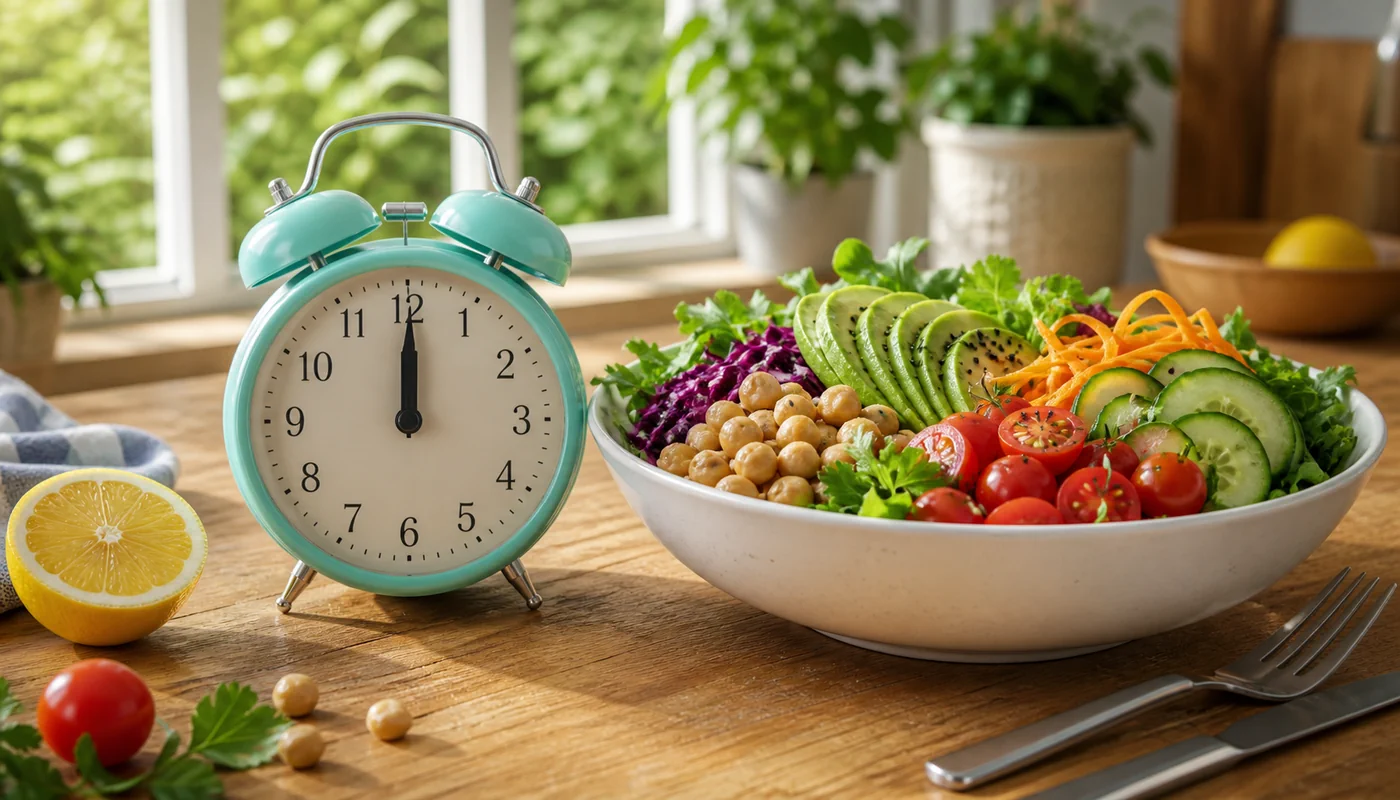
Intermittent Fasting Made Simple: A Practical Approach to Weight Loss
Highlights
- Intermittent fasting changes when you eat. Food quality, portions, and overall intake still matter.
- It can help some adults manage weight, and it works best when the schedule fits the life you already have.
- A comfortable overnight break is a gentler starting point than a very short eating window.
- Treat hunger as information. If a pattern leaves you uncomfortable, that is a reason to adjust it.
Dinner is finished, the dishes are done, and somehow the kitchen remains open for another three hours. A few crackers, something sweet, a second drink: eating can stretch across the day without much planning. For some people, putting a little structure around that pattern is easier than keeping track of every bite.
That is part of the appeal of intermittent fasting. A regular eating schedule can simplify decisions and reduce eating that happens mainly out of habit. The useful version still leaves room for satisfying meals, adequate nutrition, and a life that occasionally includes a late dinner with friends.
The best eating window is the one you can keep without thinking about it much.
The short version
Understand What the Schedule Does
Intermittent fasting is an umbrella term for eating patterns that alternate periods of eating with periods of little or no calorie intake. Time-restricted eating, one common version, places daily meals and snacks within a chosen window.
A 14:10 schedule, for example, describes 14 hours without calories and a 10-hour eating window. Much of the fasting period usually happens during sleep. Other approaches, such as alternate-day fasting or the 5:2 pattern, include days with very limited intake. They are more demanding options, not necessary next steps after a shorter overnight break.
The clock describes timing; it does not describe a complete diet. Two people using the same eating window can eat very different foods and amounts. A useful schedule creates enough structure to help while leaving enough space to meet your nutritional needs.
Keep Weight-Loss Expectations Realistic
Intermittent fasting can help with weight loss when it leads to a sustainable reduction in overall energy intake. Having fewer opportunities to snack may make that reduction easier for some people. For others, a long gap creates enough hunger that they eat more when the window opens.
The body uses a changing mixture of fuels throughout the day. Using more stored fat during part of a fast does not guarantee greater body-fat loss over time. What happens across the whole day and week still matters.
Fasting is not consistently more effective than other approaches that achieve a similar energy reduction. That makes personal fit important. If regular meals and a planned snack leave you satisfied and support your goals, there is no requirement to replace them with a fasting schedule. A method should earn its place by being workable.
Check Whether Fasting Fits Your Situation
Fasting for weight loss is not appropriate for children or teenagers, during pregnancy or breastfeeding, or for people who are underweight. It should also be avoided by people with a current or past eating disorder, because rigid food rules can revive harmful patterns.
Diabetes and medicines that lower blood sugar require particular care. Changing meal timing can cause dangerously low blood sugar, and fasting should not be started without an individualized medical plan. Medicines that must be taken with food also take priority over a chosen eating window. Do not skip or alter medication to preserve a fast.
High physical demands, recovery from illness, or other medical conditions may make restriction unsuitable, too. These are practical reasons to choose another eating pattern, not problems to solve by trying harder. Adequate nourishment comes before an impressive number of fasting hours.
Start With the Routine You Already Have
For an otherwise suitable adult, a modest overnight break is often the simplest place to begin. Finishing dinner at 7 p.m. and eating breakfast at 7 a.m. creates a 12-hour gap without removing a meal. It may be close to your existing routine.
- Note the times you already keep. Look at when you finished dinner and started breakfast this week. Most people are closer to a 12-hour gap than they expect.
- Close the kitchen after dinner. That one change does most of the work, because it removes the grazing rather than a meal.
- Keep breakfast where it is. A 12-hour overnight break needs no meal skipped and no alarm moved.
- Give it two weeks, then decide. If it has already stopped the automatic evening snacking, it is doing its job. A longer fast is not a higher score.
An overnight schedule does not need to become progressively stricter. If it helps you stop eating automatically after dinner, it may already be doing the job you wanted. A longer fast is not a higher achievement, and a timer cannot tell you whether you have eaten enough.
Notice what happens to your morning. If the schedule leaves you distracted by hunger or unable to manage your usual activities comfortably, adjust it. Moving dinner a little earlier may fit better than delaying breakfast. The aim is a pattern you can live with, not a daily contest against your appetite.
Choose Meal Times That Belong in Your Life
Your work hours, family meals, exercise, and natural appetite all deserve a place in the plan. Someone who wakes early and enjoys breakfast may prefer earlier meals. Someone with an unpredictable schedule may find rigid windows more frustrating than useful.
The body's handling of food follows daily rhythms, and earlier eating may offer advantages over concentrating meals late at night. That does not establish one ideal timetable for everyone. The benefit has to be weighed against whether the schedule allows enough food and can be maintained.
Start with the meals you want to protect. If dinner with your family is a regular pleasure, build around it rather than repeatedly missing it. If your job involves overnight shifts or safety-sensitive work, meal timing needs extra individual consideration. A preset schedule does not know what your working day requires.
Make Meals Satisfying Enough
A shorter eating window works poorly when it is filled with meals that leave you hungry again almost immediately. Include a meaningful protein source, foods containing fiber, and enough overall food to support your day. That combination also makes it easier to cover nutritional needs.
Any of these will carry a meal, and they adapt to whatever you already like to cook.
Meals that hold you until the next one
- An egg or tofu scramble with whole-grain toast and fruit
- Beans and brown rice with vegetables and a flavorful dressing
- Fish or chicken with a grain and something green
- Lentil soup with bread and a piece of fruit
- Yogurt with oats, nuts and seeds
- A baked potato with a protein filling
Carbohydrates do not have to disappear, and a meal does not need to be tiny to count as sensible. Whole grains, potatoes, fruit, and legumes can provide useful energy and nutrients. Make the food enjoyable enough that eating well does not feel like something to get through before real life resumes.
Have a Plan for Your First Meal
The first meal after an ordinary overnight fast can be a normal, balanced meal. You do not need a special juice, a supplement, or an elaborate sequence of foods to begin eating again. Prolonged fasting is a different situation and is not a routine weight-management shortcut.
Planning ahead helps avoid the familiar problem of arriving very hungry with nothing ready. Keep a few easy options available: leftovers, a sandwich with a protein filling, oats with yogurt, or a quick bean-and-vegetable bowl. Convenience is part of making the routine work.
Eat at a comfortable pace and leave room to notice satisfaction. If you regularly feel driven to eat past comfort when the window opens, reconsider the length of the fast and the adequacy of your meals. A more generous eating window may be the more useful choice.
Keep Drinks Simple
Water remains available during the usual calorie-free periods of time-restricted eating. Unsweetened tea and plain black coffee are also commonly included, although caffeine may not agree with everyone. Avoiding food does not mean avoiding fluids.
Milk in your coffee is a scheduling detail, not a failure. If you want it, build a window that includes it rather than one you have to defend every morning.
Milk, juice, sweetened drinks, and similar beverages provide calories and belong within the eating period if you are following that definition of fasting. That is a scheduling detail, not a reason to feel guilty about enjoying milk in your coffee. You can choose a routine that includes it.
Do not rely on extra caffeine to suppress hunger or force yourself through a schedule that leaves you feeling poorly. Caffeine can also interfere with sleep, particularly later in the day. Fasting before a medical procedure follows separate instructions, including rules about drinks; a weight-management routine should never replace those instructions.
Treat Hunger as Useful Information
Appetite can change when familiar meal times change, and a little hunger before a meal is ordinary. Persistent, intense hunger is different. It can mean that the eating window is too short, meals are too small, or the pattern simply does not suit you.
You do not need to wait weeks to prove you can tolerate feeling bad. Repeated headaches, nausea, poor concentration, or anxiety around eating are reasons to stop and reassess. Feeling faint or confused calls for prompt medical attention rather than pushing through the fast.
Pay attention to your relationship with food as well as physical comfort. If eating outside a chosen window begins to feel like failure, or thoughts about food take over the day, step away from the rules. Regular, adequate meals are a valid and often more comfortable way to care for yourself.
Keep Movement and Recovery in the Picture
Walking, strength training, and other enjoyable movement support health whether or not you use a fasting schedule. Eating enough protein and including strength-building activity also help support muscle while managing weight. Meal timing is one part of that larger routine.
Fasted exercise is optional. There is no need to delay food before a demanding workout simply to extend the fasting period. If training feels harder, recovery suffers, or energy drops, move the eating window or choose regular meals around activity.
Sleep deserves similar protection. A routine that encourages late caffeine use or leaves you hungry at bedtime may work against the rest you need. Consider the whole day: food, movement, concentration, mood, and sleep.
A schedule that looks neat on paper only helps if food, movement and sleep still fit together comfortably.
Worth remembering
Leave Room for Ordinary Life
Birthdays, travel, changing shifts, and shared meals will occasionally move the timetable. You can return to your usual routine afterward without skipping extra meals or adding a longer fast to compensate. Flexibility makes a plan easier to keep.
Notice whether the pattern is doing something useful. Perhaps evening grazing has decreased, meals feel more organized, or planning has become simpler. If weight loss is your goal, look for a gradual pattern over time rather than judging the method by a single day's number.
Keep what helps and change what does not. A comfortable eating window, satisfying food, and a manageable routine are more valuable than the strictest schedule. You should still have enough energy for the life you are trying to enjoy, including the occasional dinner that runs longer than expected.