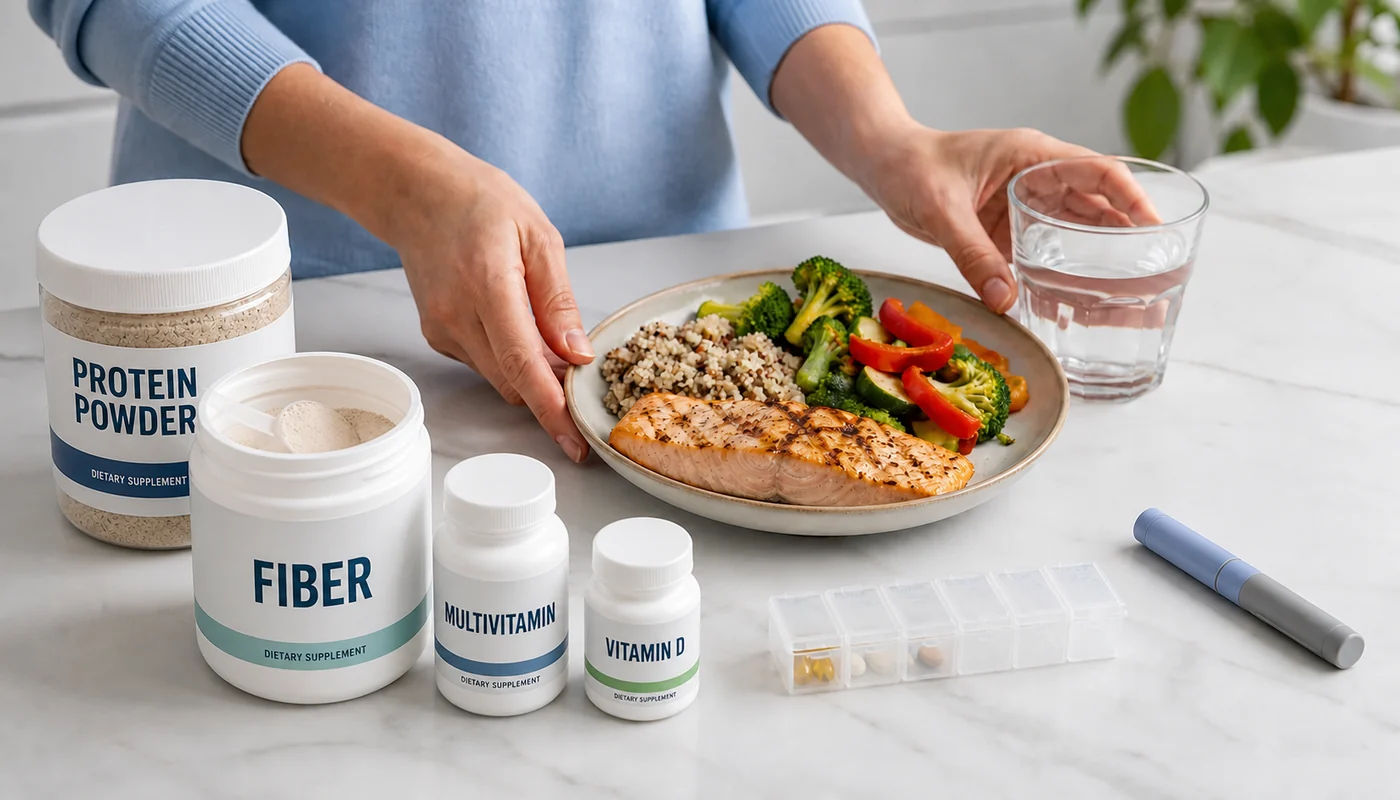
Supplements People Take Alongside GLP-1 Medications — and Why
Highlights
- A smaller appetite can make adequate nutrition harder, but GLP-1 treatment does not automatically require a collection of supplements.
- Protein products, selected vitamins or minerals, and fiber may help when they address a real intake gap or symptom.
- Preserving strength involves sufficient nutrition and resistance activity, not protein powder alone.
- Persistent vomiting, dehydration, severe abdominal pain, or difficulty eating needs a treatment review rather than another supplement.
Starting a GLP-1 medication can change the way food fits into the day. Hunger may become quieter, portions may feel satisfying sooner, and the snack cupboard may lose some of its persuasive power.
That can be helpful. It can also raise a practical question: if you are eating less, how do you make sure you are still getting enough of what your body needs?
The answer is not automatically a subscription box of companion supplements. Some products can be useful, but their role is to solve a particular nutritional problem. The best starting point is what you can comfortably eat, how you feel, and whether any specific needs are being missed.
Eating less is the problem to solve. A shelf of companion bottles is not automatically the solution.
The short version
Why Nutrition Needs Attention When Appetite Changes
GLP-1-based medicines affect appetite and other processes involved in blood glucose and weight regulation. Some treatments also act on another hormone pathway called GIP. Their effects and instructions differ, but reduced food intake is a common part of the experience.
Eating less means fewer opportunities to obtain protein, vitamins, minerals, fiber, and fluids. If meals become very small or food choices narrow substantially, nutrition can suffer even when weight loss is an intended treatment outcome.
This is not the same as saying the medicine automatically drains a particular nutrient from your body. An existing deficiency, another medication, a restricted diet, or reduced intake may be the more relevant explanation.
A useful review considers the whole pattern. Are meals regular? Is there a protein source? Are nausea or constipation limiting what you eat? A supplement decision becomes much clearer once those questions have answers.
- Are meals regular? Skipped meals from nausea are a different problem from small meals.
- Is there a protein source in each one? This is the gap that shows up first when portions shrink.
- Are nausea or constipation limiting what you eat? If so, that is the thing to address, not the nutrient it happens to affect.
- What are you already taking? Overlap between a multivitamin and separate bottles is easy to create and easy to miss.
Protein Powders and Drinks: Convenience With a Purpose
Protein products can help when a small appetite makes ordinary meals difficult. A modest shake, yogurt-based drink, or suitable plant protein product may be easier to manage than another large plate of food.
The goal is adequate total intake across the day, not an impressive amount in one sitting. Body size, age, activity, kidney health, and the degree of food restriction all affect an appropriate protein target. Copying a bodybuilding calculation is not always a useful approach.
Check whether a product is mainly protein or a nutritionally complete meal replacement. Those are different things. A scoop of protein powder may contribute very little of the energy, fiber, or micronutrients needed from a full meal.
Food remains an option too: eggs, tofu, beans, fish, poultry, yogurt, and fortified soy foods can contribute. If a shake is helpful, it should make adequate eating easier rather than become another way to avoid food altogether.
Muscle Support Requires More Than a Scoop
Weight loss can include changes in lean mass as well as body fat. Lean mass is not identical to muscle; it also includes water and other tissues. Still, maintaining muscle strength and function is an important goal during treatment.
Adequate protein helps, but resistance activity provides a separate stimulus for muscle maintenance. A suitable routine might involve bands, weights, chair-based movements, or other exercises adapted to your abilities.
Creatine sometimes enters this conversation because it can support resistance-training gains in other settings. Its specific role during GLP-1 treatment is less established, so it should not be presented as a required muscle-protection supplement.
The same caution applies to leucine, essential amino acid mixtures, and HMB. They may have selected uses, but they are not a substitute for enough food and a workable activity plan. Everyday function, such as rising from a chair or carrying groceries, is useful to monitor alongside body weight.
Protein helps, but resistance activity is a separate stimulus that a scoop cannot supply. Bands, weights or chair-based movements all count. Watch what you can do, not only what you weigh.
A Multivitamin May Fill Several Small Gaps
A standard multivitamin can be considered when food intake is consistently limited or lacks variety. It may provide a practical way to cover several micronutrients while eating patterns improve.
It does not provide protein, meaningful energy, or a full meal's fiber. It also does not guarantee that every nutrient need is covered: some products contain little calcium or magnesium, while gummies may omit nutrients found in tablets.
Avoid assuming that very high percentages on the label are better. The amounts should fit your actual needs, existing supplements, and medications. A basic formula can be more suitable than a large collection of overlapping products.
If you already take a multivitamin, include it when checking total vitamin D, iron, zinc, and other nutrients. Adding separate bottles without reviewing the overlap can create excess while leaving the original eating problem unresolved.
Vitamin D and Calcium: Think About Food First
Vitamin D and calcium may need attention when intake is low, particularly if dairy or fortified alternatives have disappeared from the menu. Age, bone health, absorption problems, and other clinical factors also influence the plan.
Useful food sources can include yogurt, milk, calcium-fortified plant drinks, calcium-set tofu, and other suitable foods. Vitamin D is found in some fish and fortified products. Labels matter because fortification varies.
A supplement may fill a gap, but a GLP-1 prescription alone does not establish that everyone needs high-dose vitamin D or extra calcium. Testing and replacement should be tied to the relevant clinical situation.
Calcium supplements can also contribute to constipation in some people, which is particularly worth considering if bowel habits have already changed. The product, amount, and timing should fit the larger treatment plan rather than being selected solely because bone health sounds like a good idea.
B12 and Iron Need Their Own Reasons
Vitamin B12 is especially relevant with vegan diets, certain absorption problems, and some medications. Metformin, which may be used alongside a GLP-1 medicine for diabetes, can reduce B12 levels over time. That is a separate issue from assuming GLP-1 treatment itself causes B12 deficiency.
Iron needs also depend on diet, blood loss, previous deficiency, and other factors. Fatigue alone cannot identify an iron shortage. Unnecessary iron can cause digestive symptoms and may worsen constipation.
Hair shedding sometimes prompts people to buy iron, zinc, or high-dose biotin. But shedding can follow substantial weight change or have other causes, and a supplement only helps when it addresses the relevant problem.
High-dose biotin can interfere with some laboratory tests. Tell the treatment team about hair-and-nail products before testing, and follow their instructions rather than choosing your own stopping interval. A careful assessment is more useful than treating every symptom as evidence of the same missing nutrient.
Fiber Can Help, but the Type and Timing Matter
Constipation can occur when food intake changes, fluid intake falls, or gastrointestinal function is affected. Fiber from foods such as oats, fruit, vegetables, and legumes may help if it is tolerated and appropriate.
A fiber supplement such as psyllium can be useful for some people, particularly when dietary intake is low. Increase gradually and use the specified amount of liquid. Psyllium powder must never be swallowed dry.
More fiber is not always the answer. Marked bloating, severe constipation, swallowing problems, or suspected narrowing or obstruction of the digestive tract requires a different assessment. If significant stomach-emptying problems are present, simply adding bulky foods or supplements may make eating harder.
Fiber can also affect absorption of some oral medicines, so check the product and medication instructions. There is no single separation interval that fits every drug. If constipation persists, the prescriber can help choose an appropriate management plan rather than relying on escalating doses of a supplement.
Electrolytes Are Useful in Specific Situations
An electrolyte powder is not automatically necessary because appetite has decreased. Many people can maintain hydration with ordinary fluids and food, adjusted to their health needs.
Fluid and electrolyte replacement becomes more relevant with substantial losses from vomiting, diarrhea, or heavy sweating. An oral rehydration product designed for that purpose is not necessarily equivalent to a fashionable low-sodium drink mix.
Kidney disease, heart disease, blood pressure treatment, and other medications can affect whether extra sodium or potassium is appropriate. More minerals are not always safer, especially when the body cannot handle them normally.
Persistent vomiting, inability to keep fluids down, very little urination, or significant dizziness needs prompt contact with the treatment team. Severe or persistent abdominal pain also warrants urgent assessment. A hydration product should not delay care or be used to make an intolerable medication regimen seem manageable.
Digestive and Weight-Loss Blends Are Not Default Companions
Probiotics, digestive enzymes, ginger blends, and magnesium products are sometimes sold as routine additions. Their value depends on the symptom and ingredient; they are not established requirements for everyone taking a GLP-1 medicine.
Digestive enzymes do not simply reverse medication-related slowing of the stomach. Probiotics are strain- and purpose-specific. Some magnesium products act as laxatives and can cause diarrhea, while impaired kidney function increases the risk from excess magnesium.
Products marketed as natural GLP-1 boosters are also not equivalent to prescription medicines. A change in a hormone measurement or a claim about appetite does not establish comparable weight-loss benefits or safety.
Avoid adding fat burners or stimulant blends to speed up treatment. They can introduce unnecessary risks and make it harder to identify the cause of new symptoms. The aim is adequate nutrition and tolerable treatment, not the fastest possible change on the scale.
Keep the Plan Small Enough to Understand
Bring an actual list of products to medication reviews, including powders, gummies, drinks, and occasional supplements. Include amounts and timing. If you use an oral GLP-1 formulation, its fasting and administration instructions need particular attention before adding products to the same morning routine.
A short food record can also help reveal patterns: meals skipped because of nausea, very little protein at breakfast, or fluids forgotten during a busy day. It does not need to become permanent tracking.
Any supplement added should have a clear purpose and a way to reassess it. The plan may change as appetite, symptoms, medication dose, and food intake change.
Successful support does not require the largest collection of bottles. It means eating adequately, maintaining useful strength, staying hydrated, and addressing problems early. Sometimes that includes a supplement. Sometimes the most helpful addition is a manageable meal and a timely conversation with the prescribing team.
Successful support is not the largest collection of bottles. It is eating adequately and keeping the strength you have.
Worth remembering